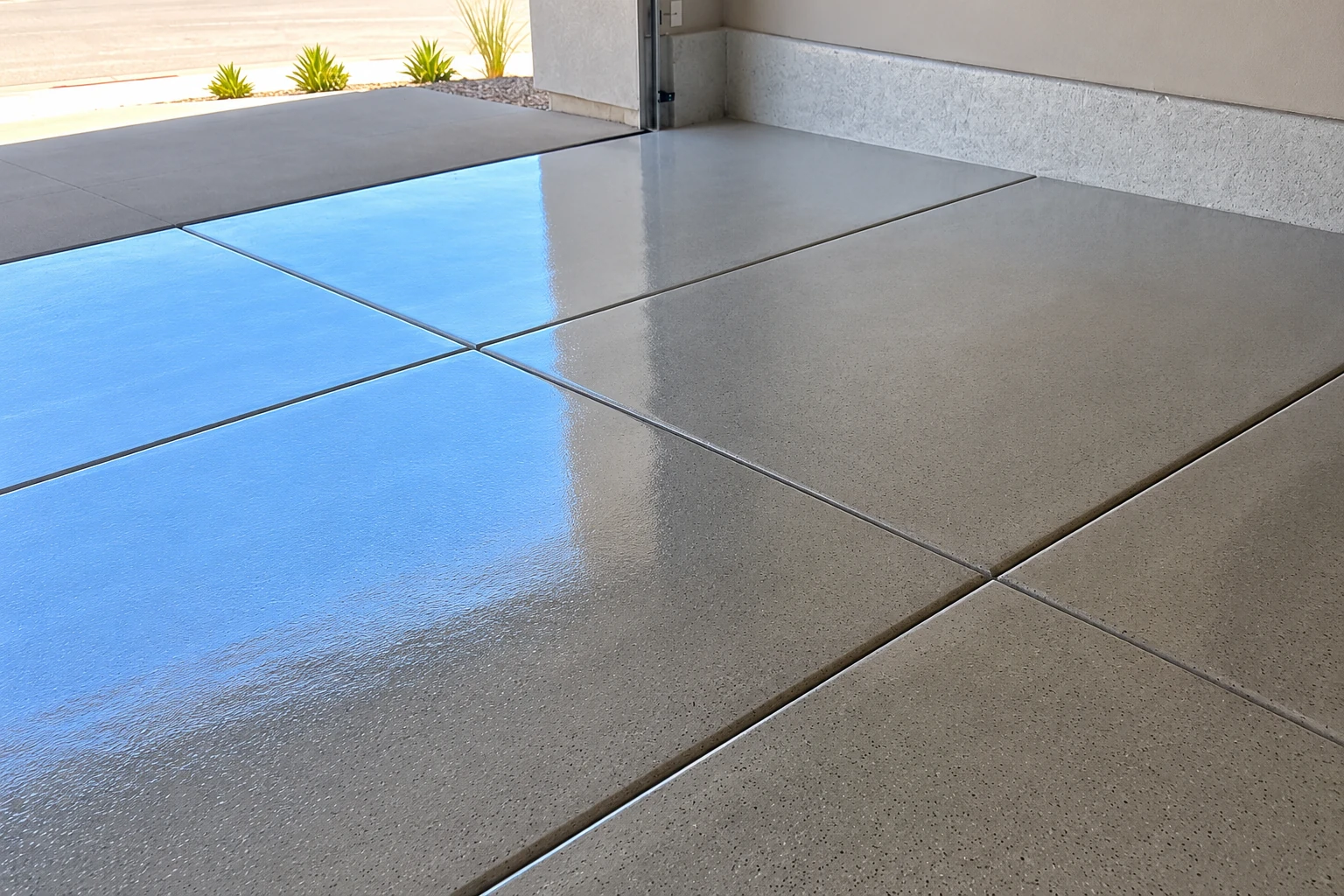
Concrete parking lot building in Santa Ana CA - a lot built to hold up for years
Got a dirt, gravel or worn-out lot that needs paving? We plan it with you first, then pour a concrete lot built for everyday parking.
What does it take to build a concrete parking lot in Santa Ana?
Concrete parking lot building in Santa Ana means preparing the ground, then forming, pouring and finishing the slab that cars drive and park on. A lot designed for the way parking actually gets used, which isn't the same as a street, can give many years of service with little upkeep, and most of the time on the project goes into planning and city review, not the pour itself.
Most owners who call us have a dirt or gravel lot, or an old one that's cracked, sinking in spots or holding water after rain, and the first questions are what it'll cost, how long the spaces will be closed and whether the new slab will crack like the old one. The price moves mostly with the lot's size, how much digging and base work the ground needs and what the design asks for, while the schedule turns on the soil study and the city's reviews more than on pour days. If old paving has to come out first, concrete cutting lets us take it out in clean sections. Your estimate is where you get your own figure.
How we handle concrete parking lot building
Most of a lot's work happens before the first pour, so we start by helping you get the soil study, the city's water quality steps and the joint layout sorted out early, since the paving design waits on that study. Once the plans are set, our crew digs out to firm ground and packs the subgrade, the soil the slab sits on, and we check where the water will run so it heads to the drains and away from buildings. We set the forms, place rebar where the design calls for it so the steel holds the slab together if it does crack, and pour in the cool of the morning, because concrete placed in midday heat can end up with a weak, dusty top. We give it a broom finish, a light ridged texture that gives tires and shoes some grip, then cut the control joints on time, since those planned lines give the slab a place to crack and decide where any cracks show up, and you're welcome to see that layout before we pour. Then the slab cures, which is the wait while it gains strength, and cars stay off until it's ready. If the budget gets tight, I'd rather trim something on the surface than the base, because nobody sees the base on day one and it's what keeps a lot from settling with the dirt underneath.
A lot rarely stands on its own. Light poles, sign posts and any wall along the edge need concrete footings poured under them, and it's simplest to set those while the crew and the plans are already on site. If a building next to the lot has settled, it's worth asking about foundation raising before the new paving goes in around it, so the grades meet up where they should.
Why Santa Ana property owners call Mainstay Santa Ana Concrete for a lot
I write every estimate myself
I come out to walk your lot and write the estimate, and I'll tell you up front that concrete can crack some, needs time to cure and may need resealing later on. I'd rather you hear that from me before we start than find it out after, and that's how I've worked since opening in 2017.
Our own crew runs your site
Our own crew does the work, with a lead hand running the site and me checking in along the way. You deal with one set of people who know your plans, and we keep the site calm and tidy so tenants and customers can work around it.
Planned to Santa Ana's paving rules
Santa Ana requires parking areas to be paved in asphalt or concrete, and accessible spaces have to meet at least the state building code's site accessibility rules, so we plan those spaces into the layout before any forms go in. We're based in Santa Ana and work across the cities around it in Orange County and nearby, so the city's reviews and inspections are part of how we schedule a lot.
Licensed and insured in California
We're fully licensed and insured, which matters on a lot because the job runs through city permits and inspections. Ask for those papers at any estimate, ours included.
On a lot, the part that matters most is the planning nobody sees once it's paved. Send us your lot's details with its rough size and any paving plans you already have, or call (657) 643-0084.
Get a free on-site estimate for your parking lot
We reply to every call and message within one business day, and the estimate is free with no obligation. Once you send the form, we'll set a time for me to come walk the lot, look at the ground and where the water goes, and write up your estimate.
Concrete paving and flatwork
Questions about concrete parking lot building
Do I need a permit to build a concrete parking lot in Santa Ana?
Expect to go through the city, because Santa Ana's Public Works Agency needs its water quality checklist, which you'll hear called a WQMP, before it issues any permits, and a checklist total of 5,000 square feet or more means a grading permit as well. We can pull the permit for you when the job needs one, and we plan the work around the city's reviews and inspections.
Does repaving an old parking lot in Santa Ana count as new development?
It can, because adding or replacing 5,000 square feet or more of hard surface on a site that's already built counts as significant redevelopment under the city's water quality rules. If you're keeping the lot's original layout, slope and purpose, ask the city whether it counts as routine maintenance, though the city can still require a grading permit for maintenance work.
How do I plan a concrete parking lot in Santa Ana?
Start with the soil study, because in Santa Ana the paving layers and their thickness follow a soils report that the city reviews and approves. Grading plans also need a registered civil engineer's stamp and signature, and the city's public works and planning staff check them at the same time, so it pays to start both early, and we help you get the soil study sorted first.
How much does a concrete parking lot cost in Santa Ana?
We price each lot after seeing it, because the cost turns on things you can only judge on site, starting with its size and how much digging and base work the ground needs. Tearing out old paving, adding drainage, a thicker slab for delivery trucks or a pervious mix with its rock storage layer all push the price up, while a simple lot on firm ground keeps it down. Bring the rough size and any plans you have, and I'll walk you through each line of the estimate.
How do I choose between regular and pervious concrete for a parking lot?
Look at your traffic first, because pervious concrete, a porous mix that lets rain soak through to a crushed-rock layer that holds the water and cuts runoff, is traditionally used on parking areas with light traffic. Its layers have to be sized to the storms, soil and traffic at your site, so we settle that choice with your design rather than up front.
Who is licensed to build a concrete parking lot in California?
Two kinds of contractors cover this work, because the state licensing board has a concrete class that pours and finishes pavement and an earthwork and paving class that grades and places paving. Ask whoever bids your lot which class they hold and which parts of the job their own crew will do.
Other concrete work around a lot
- Concrete footings
Carport columns, parking posts and freestanding signs beside a lot each need a concrete footing underneath, sized and poured to carry their weight and keep them standing straight.
- Foundation raising
If the building beside your lot has sunk at a corner, with cracked walls or sticking doors, raising its foundation can bring it back closer to level.